Ever thought about making money from your creative passion while you sleep? Many artists dream of starting their own brand. But the fear of high costs often stops them. Luckily, you can launch a successful venture today with modern e-commerce tech.
Learning how to start a print-on-demand design business without inventory is great for today’s entrepreneurs. This way, you can focus on your art while others handle production and shipping. Printful says global demand for custom clothes is higher than ever.
Starting a print-on-demand business is easier than ever. You need little money up front to start. This lets you grow your creative work into a real business. Let’s look at how to make your designs profitable.
Key Takeaways
Launch your brand with almost zero initial financial risk.
Focus your energy on creating unique, high-quality designs.
Outsource all manufacturing and logistics to reliable partners.
Tap into the massive, growing global market for custom apparel.
Generate passive income by automating your sales process.
Understanding the Print-on-Demand Business Model
The print-on-demand model lets designers make money from their creativity without keeping inventory. It’s great for those who love designing but don’t want to deal with inventory costs.
Print-on-demand is a special kind of dropshipping for creators, artists, and designers. You design unique items like t-shirts, mugs, and posters. Then, a platform produces and ships them when someone buys them.
Defining the No-Inventory Approach
The no-inventory method is key to the print-on-demand model. It means you don’t have to store or produce products upfront. This cuts down on costs and risks.
You only make products when someone orders them. This way, you can offer lots of designs without worrying about inventory.
Benefits of the POD Model for Designers
The print-on-demand model has many benefits for designers. Some of the main advantages are:
Reduced Financial Risk: You don’t have to worry about unsold products.
Increased Product Variety: You can offer many designs and products without storing them.
Focus on Creativity: The platform handles logistics, so you can focus on designing.
Benefits
Description
Reduced Financial Risk
Minimize upfront costs and financial risk associated with inventory.
Increased Product Variety
Offer a wide range of designs and products without holding stock.
Focus on Creativity
Concentrate on designing without worrying about logistics.
By using the print-on-demand model, you can start a successful business with little money upfront. It lets designers focus on their work while experts handle production and shipping.
Niche Selection and Market Research
Choosing the right niche is key to a successful print-on-demand business. It should match your passions and what people want. Good market research helps you make the best choice. Look at trends, what others are doing, and what customers like.
Identifying Profitable Design Trends
Start with what you love. Your excitement will show in your marketing. Think about problems you or others face. Use Google Trends and social media to see what people want.
Some good trends include:
Seasonal and holiday-themed designs
Niche hobbies or interests
Pop culture references
Minimalist and typographic designs
By keeping up with these trends, you can make designs that people will love.
Analyzing Competitor Offerings
Knowing what your competitors offer is important. Look at their products, designs, prices, and how they connect with customers. This helps you:
Find what makes you different
See if the market is full
Find new chances to stand out
It’s not about copying others, but learning from them to find your own spot in the market.
Validating Your Design Concepts
After identifying trends and reviewing competitors, test your ideas. See if they click with your audience. You can do this by:
Doing polls and surveys on social media
Starting pre-sales or crowdfunding
Getting feedback on early versions of your designs
Testing your ideas is key to avoiding launching products that won’t sell. By doing these steps, you can pick a niche that’s both profitable and true to your vision.
How to Start a Print-on-Demand Design Business Without Inventory
Starting a print-on-demand design business without inventory needs careful planning. Many new entrepreneurs try to sell everything to everyone. But, focusing on a specific niche is key to success.
Choosing a niche lets you tailor your products and marketing to meet your audience’s needs. This focused approach helps build a strong brand and loyal customers.
Step One: Defining Your Brand Identity
Defining your brand identity is the first step. It involves creating a unique voice, visual look, and mission statement. These elements should resonate with your target audience.
Your brand voice should show your brand’s personality and values. Your visual aesthetic includes logos, colors, and fonts. A clear mission statement guides your decisions and keeps you focused.
Step Two: Registering Your Business Entity
After defining your brand, register your business entity. This legal step is essential for legitimacy and tax benefits.
Registering your business builds trust with customers and partners. You can choose from a sole proprietorship, an LLC, or a corporation, based on your needs.
Step Three: Establishing Your Financial Infrastructure
Setting up a solid financial system is critical. This includes a payment gateway and accounting system. These tools help manage your finances and track income and expenses.
A well-organized financial system ensures you make informed decisions and plan for growth. It also helps with taxes and transparency with stakeholders.
By following these steps, you build a strong foundation for your print-on-demand business. A clear brand, registered business, and solid finances are essential for success.
These foundational elements support your print-on-demand marketing strategies. They help you reach and engage your audience more effectively.
Selecting the Right Print-on-Demand Platform
Choosing the right print-on-demand platform is key when starting your business. It affects product quality, shipping times, and customer happiness. A good partner ensures your products are top-notch and delivered quickly, boosting your brand.
Many entrepreneurs agree that the right platform is vital. For example, one owner said,
“Printful allowed me to start a business with zero capital in my spare time. It was easy to set up and Printful do all the hard work for me. All I have to do is supply the ideas and the traffic, then everything else is taken care of.”
This shows how important it is to pick a platform that fits your business needs.
Comparing Printful and Printify
Printful and Printify are top choices for print-on-demand services. They both have a wide range of products and work well with online stores. But there are some differences to consider.
Product Range: Printful offers a wider range of products, including clothing, accessories, and home decor.
Pricing: Printify lets designers set their own prices, which can be cheaper.
Integration: Both work with big online stores like Shopify. But, Printful is known for being easier to use.
Feature
Printful
Printify
Product Range
Wide range including apparel and home decor
Varied selection with a focus on apparel
Pricing Model
Fixed pricing
Competitive pricing with flexible profit margins
E-commerce Integration
Seamless integration with major platforms
Robust integration with popular e-commerce sites
Evaluating Gooten and Gelato
Gooten and Gelato are also big names in print-on-demand. They offer special features for different business needs.
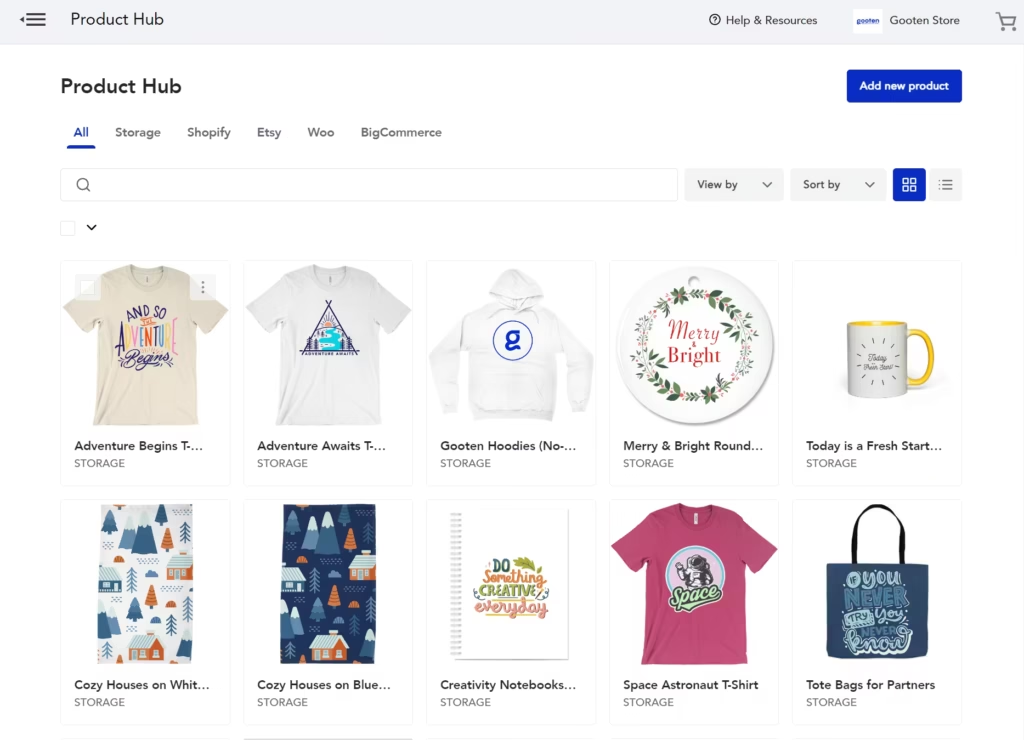
Gooten offers many products and ships worldwide. Gelato focuses on fast shipping with its global print network.
Gooten: Offers a wide range of products and has a strong focus on global shipping.
Gelato: Provides a personalized experience with localized printing, reducing shipping times and costs.
Factors to Consider When Choosing a Provider
When picking a print-on-demand platform, think about a few key things. It’s important to look at product quality, shipping times, customer service, integration, and pricing.
Product Quality: Make sure the platform offers high-quality products.
Shipping Times: Choose a platform with quick and reliable shipping.
Customer Service: Choose a provider with strong customer support.
Integration: Check if the platform works well with your online store.
Pricing: Look at the pricing model and how it affects your profits.
By carefully considering these factors and comparing platforms, you can choose the best one for your business.
Creating High-Quality Designs for Your Products
Making great designs is key to standing out in the print-on-demand world. You need the right tools and knowledge to make designs that your audience will love.
Investing in the right design tools is the first step. Graphic design software such as Adobe Illustrator and Canva can help you achieve professional results. Design makers also let you upload graphics, add text, and create patterns, making your designs unique and eye-catching.
Essential Design Tools for POD
Start by getting to know design software with lots of templates and options. Some platforms even offer high-resolution mockups to show how your designs will look on different products. This ensures your final product looks just right.
Adobe Illustrator for vector graphics
Canva for easy design editing
Design makers for creating custom patterns and text overlays
Understanding Print File Requirements
Every print-on-demand platform has its own file requirements. Knowing these is key to avoiding any design problems. Always check the file format, resolution, and size to make sure your designs print well.
By following your POD platform’s guidelines, you can make sure your designs are top-notch and meet all technical needs.
Optimizing Designs for Different Product Types
Designs for different products need different approaches. For example, a t-shirt design might need changes for a mug or a phone case. Think about the product’s material, size, and color when designing.
Testing and iterating on your designs is important. It helps you offer more products and attract more customers. This way, your designs will not only look good but also fit the product perfectly, improving the customer experience.
Setting Up Your Online Storefront
Your online storefront is the heart of your print-on-demand business. It shapes how customers see your brand and what they buy. Before you launch, you’ll face important choices that will shape your success.
Choosing Between Shopify and Etsy
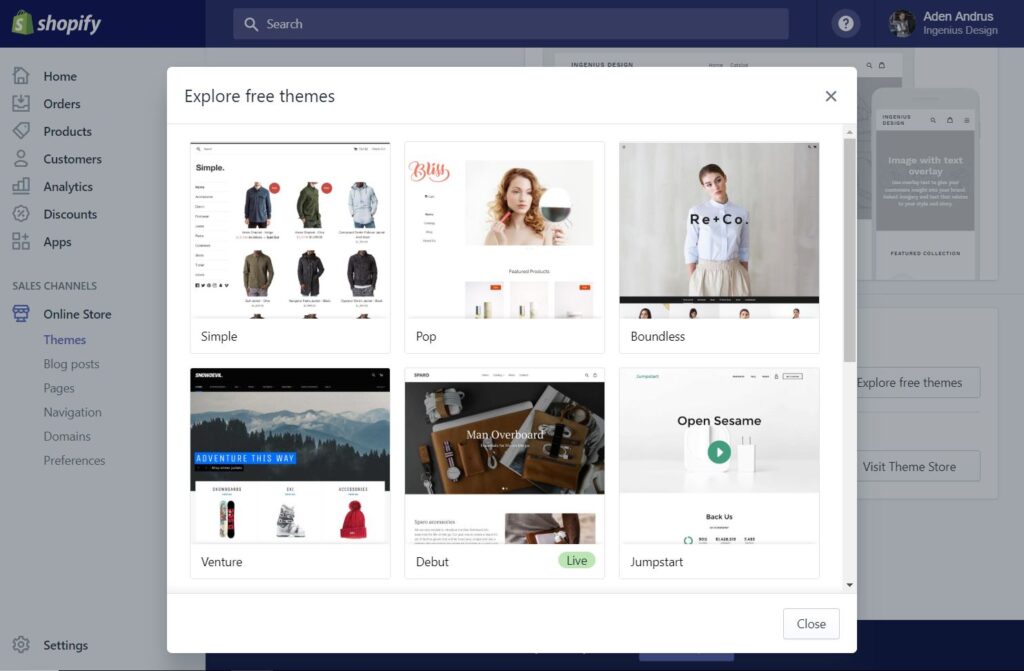
For newbies, Shopify is a top pick because it’s easy to use and packed with features. It has tools to help you run your store smoothly. Etsy, on the other hand, is great for selling unique, handmade items. Think about who you want to sell to and what you’re selling when making your choice.
Ease of use and setup
Customization options for your store
Integration with print-on-demand services
Transaction fees and pricing plans
Customer support and resources
Designing Your Store Layout for Conversions
Creating a good store layout is key to turning visitors into buyers. Your store should look good, be easy to get around, and work well on phones. Make sure your product categories are clear, and your designs are shown in top-notch images.
Writing Compelling Product Descriptions
Writing great product descriptions is vital for grabbing customers’ interest and boosting sales. Your descriptions should highlight what makes your designs special and the benefits of your products. Use persuasive language and include keywords to help with search rankings.
By focusing on these areas, you can build an engaging online storefront. It will draw in customers and keep them coming back.
Integrating Your Store with Production Partners
Working well with production partners is key to a successful print-on-demand business. It ensures orders are filled on time and are of high quality. By linking your online store to a trusted partner, you can automate order processing, reduce errors, and make customers happier.
Printful says, “Selling products online with Printful gives you over a decade of ecommerce know-how, reliable quality, and quick support.” This shows the perks of teaming up with a seasoned print-on-demand company.
Connecting Your Store via API
Most print-on-demand sites have API links with popular e-commerce platforms. This makes it easy to link your store and automate order processing. To connect your store via API, you need to:
Choose your preferred e-commerce platform and print-on-demand provider.
Get an API key from your print-on-demand provider.
Put the API key into your e-commerce platform’s settings.
Set up the integration as you like.
Managing Product Syncing and Variants
It’s important to keep your product catalog current and correct. This means:
Keeping your product catalog in sync with your print-on-demand provider.
Handling product variants, like different sizes, colors, and styles.
Making sure product details are correct and consistent everywhere.
Testing Sample Orders for Quality Assurance
Testing sample orders is vital for quality checks. It lets you check product quality and shipping reliability. To test sample orders well:
Order a sample for each product type.
Check the product quality, packaging, and shipping time.
Use what you learn to improve your products and better serve customers.
By linking your store with your production partner well, you can streamline your operations and make customers happier. This partnership is essential for a thriving print-on-demand business.
Effective Print-on-Demand Marketing Strategies
To succeed in the print-on-demand industry, you need to use effective marketing strategies. These strategies should connect with your target audience. A good marketing plan can help you stand out, bring more traffic to your store, and boost sales.
Experts say, “Use digital marketing to promote your products through ads and social media platforms. Look at what other sellers in your niche are doing. Learn from them and adjust your marketing strategy to get more sales.” This shows how important it is to stay informed and flexible in your marketing.
Leveraging Social Media for Brand Awareness
Social media is a great way to increase brand awareness and drive traffic to your store. By sharing engaging content on platforms like Instagram, Facebook, and Pinterest, you can reach more people. This helps you build a loyal customer base.
Key strategies for social media success include:
Posting high-quality product images and behind-the-scenes content
Using relevant hashtags to increase visibility
Engaging with your audience through comments and direct messages
Running social media contests or giveaways to drive engagement
Utilizing Influencer Partnerships
Working with influencers who match your target audience can be very effective. Influencers can help you reach new customers and build your brand’s credibility.
When choosing influencers, look at their audience demographics, engagement rates, and content quality. It’s essential to choose influencers who align with your brand values and aesthetic.
Implementing Paid Advertising Campaigns
Paid advertising on platforms like Google Ads or Facebook Ads can help you reach more people and drive sales. By targeting specific demographics and interests, you can make sure your ads are seen by the right people.
To maximize the effectiveness of your paid advertising campaigns:
Set clear goals and budgets for your campaigns
Target specific demographics and interests
Use compelling ad copy and high-quality images
Monitor and optimize your campaigns regularly
By using these marketing strategies together, you can build a strong brand presence. This attracts a loyal customer base. Always be ready to adjust your marketing approach to get the best results.
Managing Customer Service and Quality Control
To build a reputable no-inventory design business, focus on great customer service and quality products. This means several key strategies. They boost customer happiness and help your POD business grow.
Handling Returns and Exchanges
Your return policy depends on your supplier’s rules. Most suppliers handle returns for damaged or wrong items. Make sure to post your return and exchange policies clearly on your website.
When a customer requests a return or exchange, respond promptly and politely. Have a way to track these requests and to communicate smoothly with both the customer and your POD partner.
Key Considerations for Returns and Exchanges:
Clearly define your return and exchange policies
Communicate promptly with customers and POD partners
Have a tracking system for return/exchange requests
Maintaining Communication with Your POD Partner
Good communication with your POD partner is key to quick issue solving and happy customers. Always check for updates on order status, product quality, and any delays.
Communication Aspect
Best Practice
Order Status Updates
Regularly check with your POD partner for updates
Product Quality Issues
Promptly report and resolve quality issues
Shipping Delays
Keep customers informed about any delays
Building Customer Loyalty Through Transparency
Being open is key to earning your customers’ trust. Share your business practices, like production and shipping. Consider providing tracking info and order status updates.
By focusing on customer service and quality, you make shopping great. This makes customers come back and tell others. It builds a loyal customer base and helps your no-inventory design business grow.
Conclusion
Starting a print-on-demand design business without inventory is a smart move. It lets you focus on being creative and marketing. By understanding the business model and picking a profitable niche, you can build a successful online business.
Choosing the right platform, like Printful or Printify, is key. Also, using effective marketing strategies is important. Good customer service and staying up to date with market changes will help your business grow.
With the right approach and resources, you can make your creative talents into a successful business. By following the steps in this article, you’ll be on your way to a thriving online presence.
Ready for Your Next Venture as a Design Entrepreneur?
You didn’t just read this article to learn — you read it to build a better design business.
Choose your next move inside The DesignLemonade framework:
START → Launch your design business with clarity SYSTEMS → Build client, pricing, and workflow systems MONEY → Price confidently and plan for profit GROWTH → Attract better clients and scale sustainably MINDSET → Think like a long-term business owner
👉 Download the FREE Design Business Checklist + 90-Day Action Plan Your step-by-step guide to turning ideas into action.
💌 Join the newsletter for weekly tools, strategies, and real-world design business insights. 🎥 Watch practical design business education on YouTube.
Let’s stop guessing — and start building.
FAQ
Is a pod business startup truly low-risk?
Yes. Starting a print-on-demand design business without inventory means your main investment is your time and design talent. You only pay for products after you’ve made a sale, eliminating the risk of lost capital on unsold stock.
What are the best print-on-demand tips for beginners?
Focus on a specific niche instead of trying to sell to everyone. Always order samples from providers like Printful or Gelato to ensure the final product meets your standards before your customers see it.
How much can I earn starting a pod business?
Your earnings depend on your profit margins and volume. Most designers aim for a 20% to 40% margin. By using effective print-on-demand marketing strategies, you can scale your sales significantly without increasing your workload.
Do I need professional software for a no-inventory design business?
While Adobe Illustrator is a professional favorite, many successful entrepreneurs use Canva or Procreate. The key is to ensure your files meet your production partner’s high-resolution requirement (300 DPI).
How long does shipping usually take for a print-on-demand business?
Production usually takes 2–5 business days, followed by shipping. Using providers with local facilities, like Gelato, can significantly reduce delivery times for international customers.
Julio Cesar Falu is a graphic design educator, entrepreneur, and founder of TheDesignLemonade.com, a platform dedicated to helping creatives build profitable design businesses. With over 20 years of experience in design education, business strategy, and creative entrepreneurship, he shares practical insights on freelancing, branding, digital products, income growth, and long-term business development. His mission is to help designers move beyond creating and start building sustainable businesses and ownership-driven careers.








No Comments